Man cave guide
Recliner vs Sectional for a Small Man Cave

In this guide
In a small man cave, one or two recliners usually beat a sectional. Recliners give each person the most comfortable seat in the room, fit around doors and odd corners, and can sit right against the wall if you choose wall-hugger models. A sectional wins when you regularly host four or more people and the room has a clear corner with about 9 ft of wall on at least one side. Here's how to decide, with real footprints, clearances and layouts for rooms from 100 to 250 square feet.
Recliner vs sectional at a glance
Dimensions below come from listed specs for furniture in our store, plus typical clearances. Always check the fully reclined depth and overall size of the exact piece you're considering.
| Recliners | Sectional | |
|---|---|---|
| Seats | One per chair | Three to six, depending on size |
| Footprint, upright | About 27 to 35 in wide by 30 to 35 in deep per chair | Large and fixed; our U-shaped sofa is 110 x 51 in |
| Space behind | Standard recliners often need a foot or more; wall-huggers need only a few inches | None; it can sit against the wall |
| Space in front | Extra depth when the footrest is out | Room for legs, a coffee table or an ottoman |
| Layout flexibility | High; move chairs around doors, vents and windows | Low; needs a corner or a long wall |
| Comfort for long sessions | Excellent, and each person sets their own position | Good; the chaise is the prime seat |
| Napping and overnight guests | Fine for a nap | Better, especially sleeper sectionals |
| Price in our store | About $328 to $745 per chair | About $921 to $1,998 |
| Best for | Rooms under 150 sq ft, one or two regular users, theater-style viewing | Rooms over 150 sq ft, regular group nights, mixed lounging |
The space math
Small rooms run out of floor space in three places: behind the seat, in front of it, and in the walkway.
- Behind a recliner. A standard rocker or push-back recliner needs open space behind it to lean back, often a foot or more. A wall-hugger slides the seat forward as it reclines, so it can sit almost against the wall. Our Wall-Hugger Power Recliner ($649.99) is listed as needing about 0.4 in from the wall.
- In front of a recliner. When the footrest comes up, a recliner gets much longer. Many full-size recliners stretch to around 5 ft or more fully reclined, so check the spec before you assume it fits in front of a bar or a door.
- Walkways. Plan about 30 to 36 in for a main path through the room. A sectional often blocks that path if it floats in the middle of a small room; recliners can be spaced to leave it open.
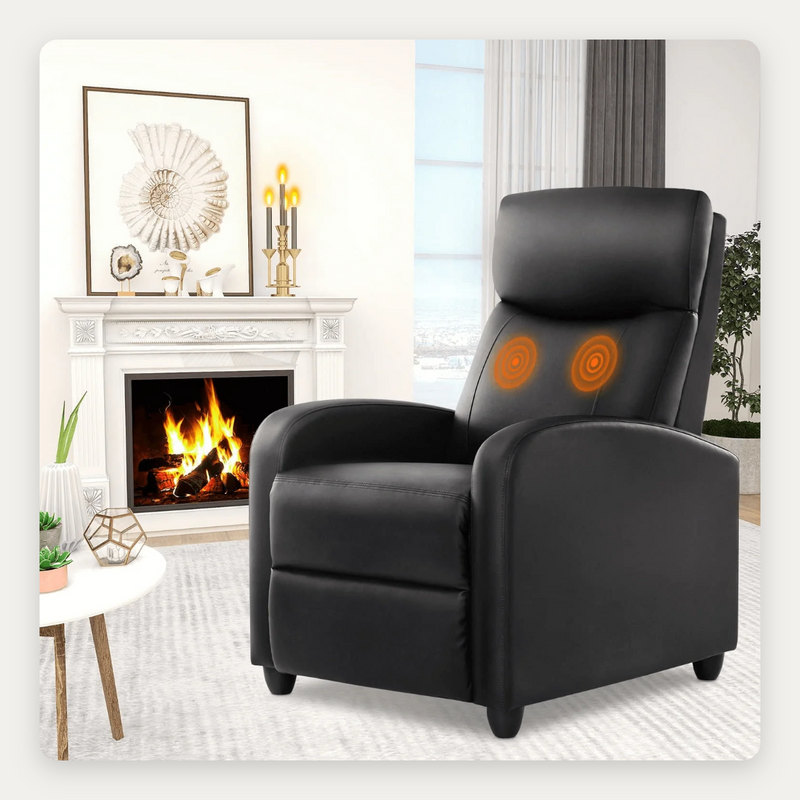
Now compare seats per square foot. Our U-Shaped Modular Sofa ($920.99) seats four in 110 x 51 in, about 39 sq ft, or just under 10 sq ft per person with no space needed behind it. Two compact recliners like our massage recliner (about 27.1 x 34.2 in each, upright) use roughly 13 sq ft for two seats, plus room to recline. So the sectional seats more people per square foot, while recliners take less total floor and give each seat more comfort. In a tiny room, total floor is what runs out first.
Layouts that work in small man caves
Spare bedroom, about 10 x 10 ft
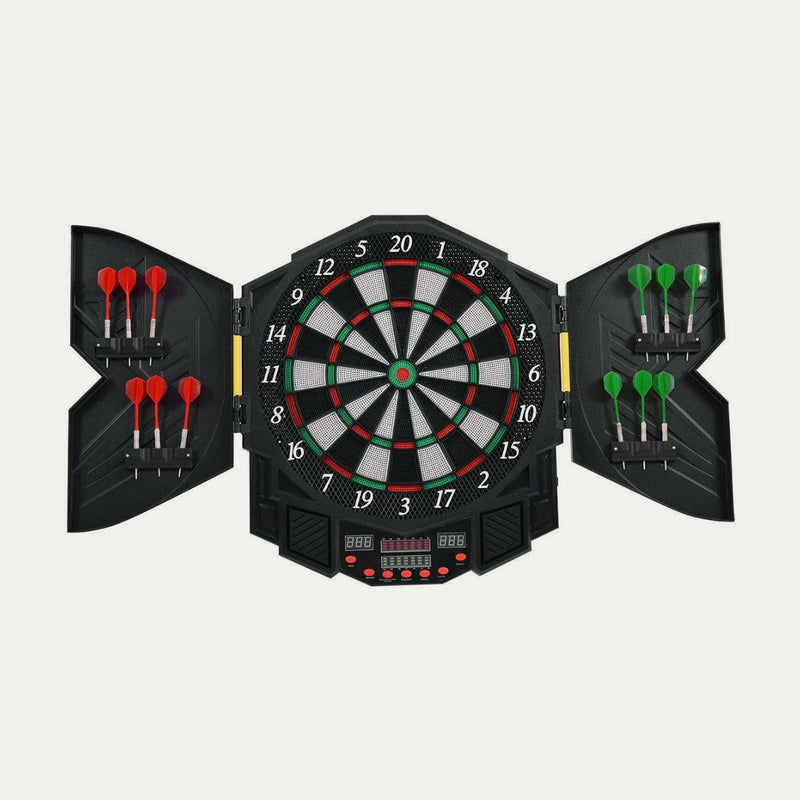
Two wall-hugger recliners side by side, facing a TV on the opposite wall, with a small table between them for drinks. That leaves floor for a walkway and a dartboard wall or a bar cart. A sectional in this room fills most of the floor.
Half a garage bay or a 10 x 12 ft shed
One or two recliners, or a loveseat plus one recliner. Keep seating away from the garage door track and anywhere water comes in under the door. Put a rug or interlocking tiles under the seats so fabric isn't sitting on bare concrete.
Basement nook, about 12 x 14 ft
This is the size where a compact sectional starts to make sense. Put it in the corner farthest from the stairs, facing the TV wall, and keep the open side toward the walkway. If you watch more movies than you host, two recliners and a small sofa is still the more comfortable setup.
Bonus room, about 14 x 18 ft
Here you can have both: a sectional for the group and one recliner as the head-of-household seat. The man cave furniture guide has footprints for every seating type.
Screen distance and sightlines
Whichever you choose, the seats need to face the screen at a comfortable distance. A common guideline for 4K TVs puts your eyes about 1.2 to 1.6 times the screen's diagonal away, so roughly 5.5 to 7.3 ft for a 55 in TV. Recliners make that easy because you can slide each one to the right spot. A sectional's long side should face the screen, with the chaise or short side along a wall. Our home theater setup guide covers screen size, mounting height and sound.
When a recliner is the better choice
- The room is under about 150 sq ft or has doors and windows on most walls.
- One or two people use it most nights.
- You want theater-style seats where everyone reclines.
- You need to get furniture down narrow basement stairs. Single chairs are easier to move than a big sectional, though many sectionals come apart into modules.
- You want extras like massage, heat, power recline or USB charging in your own seat.
When a sectional is the better choice
- You host four or more people for games or fights on a regular basis.
- The room has a clear corner and at least one long wall.
- You want a place to stretch out or a bed for an overnight guest; a sleeper sectional handles both.
- You like sitting in different positions through a long game rather than in one fixed recline.
The middle ground
If you're stuck between the two, there are good compromises. A loveseat plus one recliner seats three in less space than most sectionals. A modular sofa can be set up as an L now and reconfigured if you move. And a futon or ottoman sofa bed gives you lounging and a spare bed in a small footprint. Browse all of them in man cave furniture, and see more space-saving ideas in our guide to small man cave ideas.
Not sure what fits? Measure the room, mark doors and windows, and try different seats in the Man Cave Builder before you order.
FAQ
How much space do you need for a recliner?
Plan for the chair's upright footprint, plus the space it needs behind it to lean back and the extra length in front when the footrest is up. A wall-hugger cuts the space behind to a few inches. Check the fully reclined depth on the spec sheet.
Is a sectional too big for a small room?
In rooms under about 150 sq ft, usually yes, because it takes over the floor and blocks walkways. A compact L-shaped sectional can work in a corner if it leaves a clear path of about 30 to 36 in.
Are wall-hugger recliners worth it in a small man cave?
Yes. They recline fully while sitting close to the wall, which can save a foot or more of floor compared with a standard recliner.
Can a sectional go in a garage man cave?
Yes, if the space stays reasonably dry and comfortable. Keep upholstery off bare concrete with a rug or floor tiles, keep it away from the door, and control dampness so fabric doesn't get musty.
Plan it first
Build this man cave before you buy it.
Pick your space, size, vibe and budget, and the Man Cave Builder turns it into a real kit you can add to cart in one click.
Open the Man Cave BuilderShop this guide
Man Cave Furniture


Gaming & Seating
Saddle Leather Cube Side Tables, Set of 2 Sizes — Brown


Gaming & Seating
Round Wood Coffee Table with Hidden Drawer, 33 in — Walnut


Gaming & Seating
Locker-Style Steel End Table with Magnetic Door — Red


Gaming & Seating
Farmhouse Square Coffee Table with Flip-Top Storage — Black
Keep reading